Coach at 85: Heritage Needs a Present Tense
An archive becomes commercially interesting when it gives somebody a reason to care now.
Eighty five years is a fact. Making that history matter to somebody getting dressed today is a creative assignment.
InStyle’s coverage of Coach’s Spring 2027 anniversary show describes Stuart Vevers revisiting familiar silhouettes and accessories while introducing festive color, sequins and party details. The account presents a collection concerned with memory and transformation. I see a useful question here for any established brand: what can your history still do?
A timeline can establish credibility, but it cannot carry the whole emotional argument. Most people have not spent years studying your archive. They arrive with their own memories, needs and associations. The work has to meet them there.
My preferred test is simple. Remove the anniversary number from the campaign. Is there still a compelling idea? Does the product feel necessary to a character’s life? Can someone who knows nothing about the company understand why this object matters?
If the answer depends entirely on explaining how old the house is, the history is doing too much of the selling.
An archive should give a creative team decisions to work with: a useful construction detail, a recognizable gesture, a proportion, an attitude toward living. Translate that into a present situation. Let the audience see how it behaves.
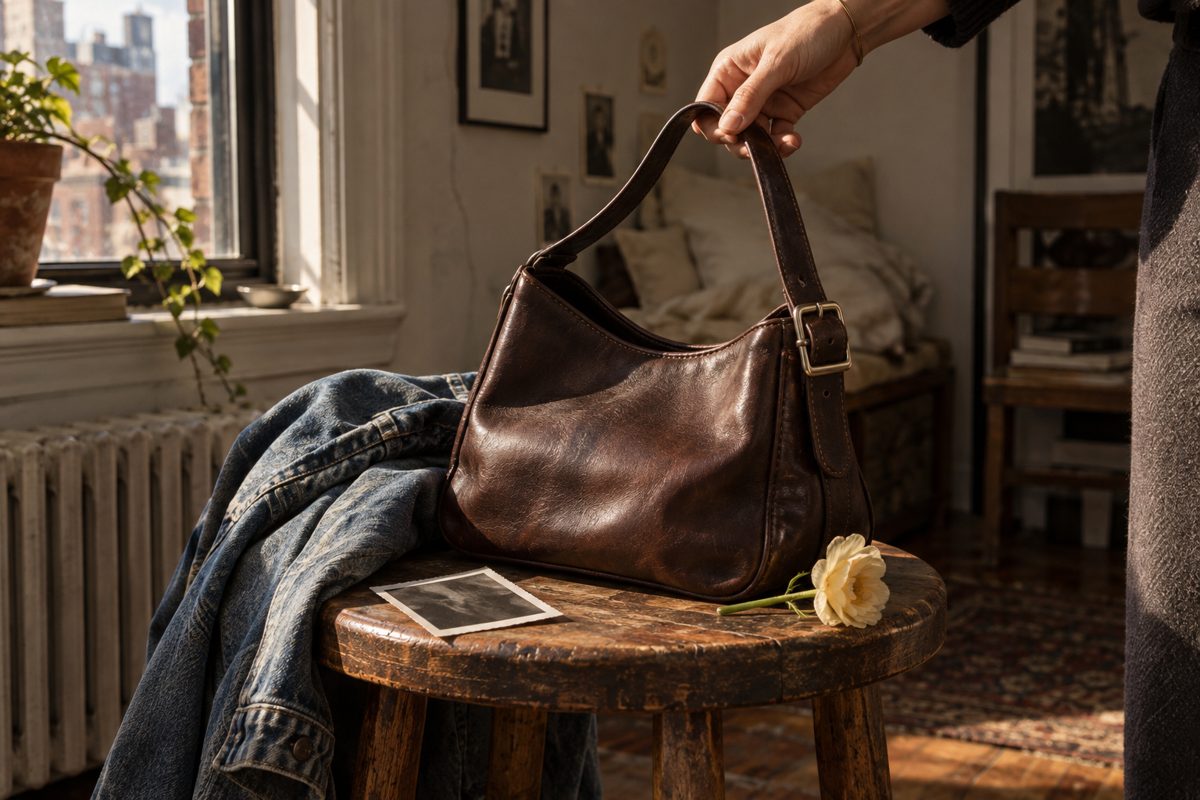
For a heritage campaign, I would build a short film around one object passing through ordinary moments. A hurried departure. A difficult conversation. A return home. The object acquires meaning because a person carries it through something. Close photography can reveal material and use; longer scenes can establish attachment.
That is a proposed direction, not a description of Coach’s advertising or evidence of sales performance. A runway collection can prompt a strategic reading without proving that the strategy has already worked.
The commercial question would be whether the story helps people recognize the product, understand its value and imagine using it. Views alone would not answer that.
Heritage becomes powerful when it can participate in a new life. The archive supplies the starting point. The person supplies the future.